AI Boom Impact on Business Technology Costs Explained
If it feels like technology has been getting more expensive lately, that instinct is right, and the reason might surprise you. It’s not just inflation in the traditional sense. There’s a very specific culprit driving prices up across the board, and it’s something most have heard of but may not have connected to their own technology bills: Artificial Intelligence.
A Quick Backstory on Computer Memory
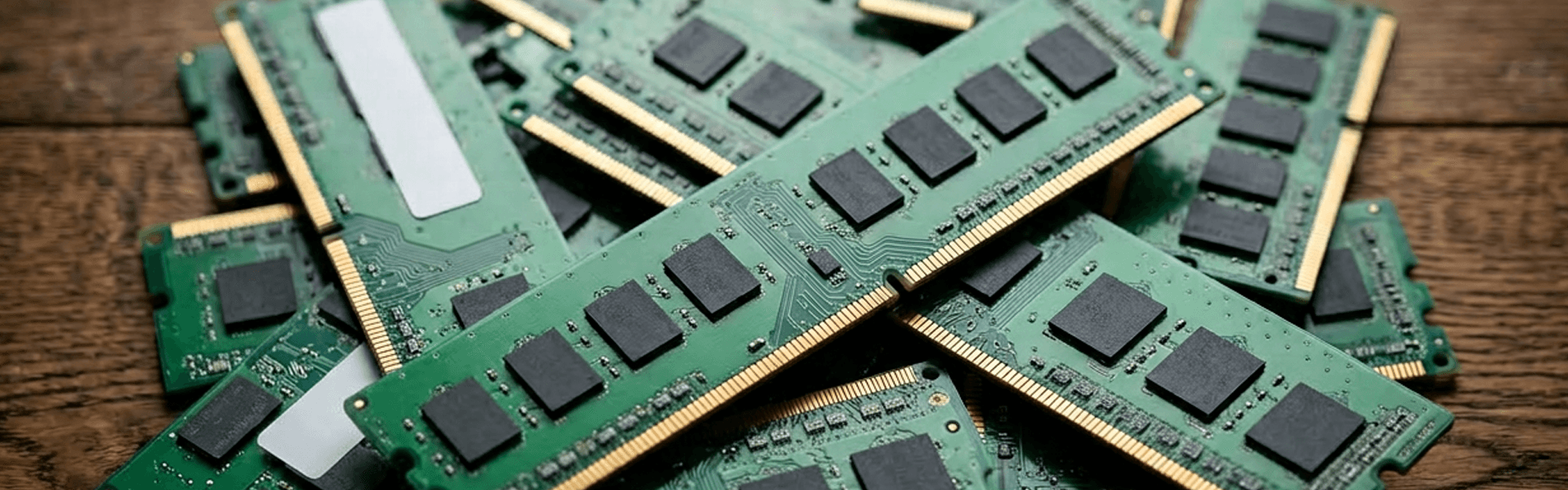
Inside every computer, server, and piece of technology equipment lives a component called RAM. Think of it like a machine’s short-term memory. It’s what allows a computer to run multiple programs at the same time without slowing to a crawl. For years, RAM prices were stable and predictable, quietly humming along in the background of the technology world.
That stability has come to an abrupt end.
AI adoption has exploded across nearly every industry, and the AI systems powering it all require enormous amounts of memory to function. We’re talking about the AI technology behind generative AI tools like ChatGPT, large language models built on machine learning and natural language processing that understand and respond to human language, and a growing list of AI tools with real-world AI applications in business. From process automation and customer service to content creation and cloud computing infrastructure, businesses everywhere are racing to put these capabilities to work.
All of that requires massive AI infrastructure, and as IntuitionLabs puts it, “AI data centers from giants like Nvidia, Google, and Microsoft are voraciously consuming memory, effectively outbidding consumer PC, gaming, and smartphone markets for available supply.” The global supply chain simply wasn’t built to keep up with that pace of demand.
The result is a classic supply-and-demand crunch: not enough product to go around, and prices climbing fast.
How Bad Is It?
To put it in concrete terms, used sticks of server memory that used to sell for a couple hundred dollars are now fetching up to $1,000 each. In some cases, that’s more than they cost brand new just a few years ago. And it’s not limited to used equipment. Club386 recently reported that “a basic 32GB DDR4 kit has gone from $47.49 to $262.99 in less than a year” and that DDR4 spot prices are now “as much as 172% higher than contract prices.”
That’s not a typo.
Why Does This Affect Everything?
Here’s where it gets relevant for everyday technology users and businesses alike. RAM lives inside a lot of things. Laptops, desktops, servers, networking equipment, storage devices. If it computes, it almost certainly has memory in it. That means this shortage doesn’t stay neatly contained in one corner of the tech world. It spreads outward into nearly every product category, and the effects show up in places businesses might not expect, including rising cloud costs for companies that rely on hosted services and software.
IntuitionLabs notes that “major PC makers including Dell, Lenovo, and HP have signaled that they will raise PC prices by 15 to 20% in early 2026 as memory costs surge,” adding that memory cost “now accounts for roughly 18% of a new PC’s bill of materials, about twice the 2024 share.”
Hardware vendors have already begun issuing formal price adjustment notices, with some indicating that pricing may be reviewed and updated as frequently as every month for the foreseeable future, with potential increases of up to 5% per month depending on how supply chain management conditions evolve.
Is There an End in Sight?
The honest answer is that no one knows exactly when this will ease. Not vendors, not analysts, and not even the chip manufacturers themselves. NewServerLife summarizes the situation plainly: “The current price surge isn’t local or temporary. It’s part of a global trend driven by structural changes in the semiconductor industry. Until manufacturers rebalance production toward legacy DRAM, the upward pressure will persist.”
Part of what makes this so difficult to predict is the pace of AI adoption itself. Businesses of all sizes are racing to capture productivity gains through AI, and that demand shows no signs of slowing in the near term. Most industry experts agree this is a market cycle driven by extraordinary demand rather than a permanent shift in how technology is priced. Analysts currently expect prices to remain elevated through at least the first half of 2026, with meaningful relief unlikely before late 2027. As Club386 points out, “this shortage may persist well into 2027 or beyond, as new fab capacity takes years to come online.”
What This Means for Businesses Right Now
For businesses that rely on technology, which at this point is nearly every business, this is a trend that deserves a close look. It’s not just about the sticker price on a piece of hardware. The ripple effects touch business operations at multiple levels, from the devices employees use every day to the servers that keep critical systems running. When evaluating upcoming purchases or renewals, it’s worth thinking beyond just the upfront price and considering the total cost of ownership over the life of the equipment, especially when monthly price adjustments are now part of the equation.
As ServerMonkey puts it, “if you have been shopping for memory lately, you have probably noticed something: prices are climbing fast and availability is shrinking” and the “‘wait tax’ remains in full effect as general inventory continues to dry up.”
When it comes to best practices for managing technology costs in this environment, a few practical things to keep in mind:
- Upcoming hardware purchases or renewals may cost noticeably more than expected, even compared to quotes from just a few months ago
- Open quotes from vendors may not hold, as many suppliers are automatically updating pricing as market conditions change
- Timing matters. In some cases, moving up a planned purchase before additional increases take effect could result in real savings. In others, waiting may be the smarter move depending on the situation
The best thing anyone can do right now is stay informed and plan ahead rather than being caught off guard when a renewal or purchase comes due.
The Bottom Line
The AI revolution is reshaping a lot of things, including the cost of everyday technology. As NewServerLife concludes, “DDR4 prices are unlikely to return to 2024 levels anytime soon. The combination of AI-driven demand, shrinking production, and sustained data-center growth has created a perfect storm for the memory market.”
While the long-term outlook is expected to improve, the short-term reality is that prices are rising, and businesses that understand why are better positioned to make smart decisions going forward.
Have questions about how rising technology costs might affect your business? Reach out to our team. We’re always happy to help.
Sources: